
 EN
EN

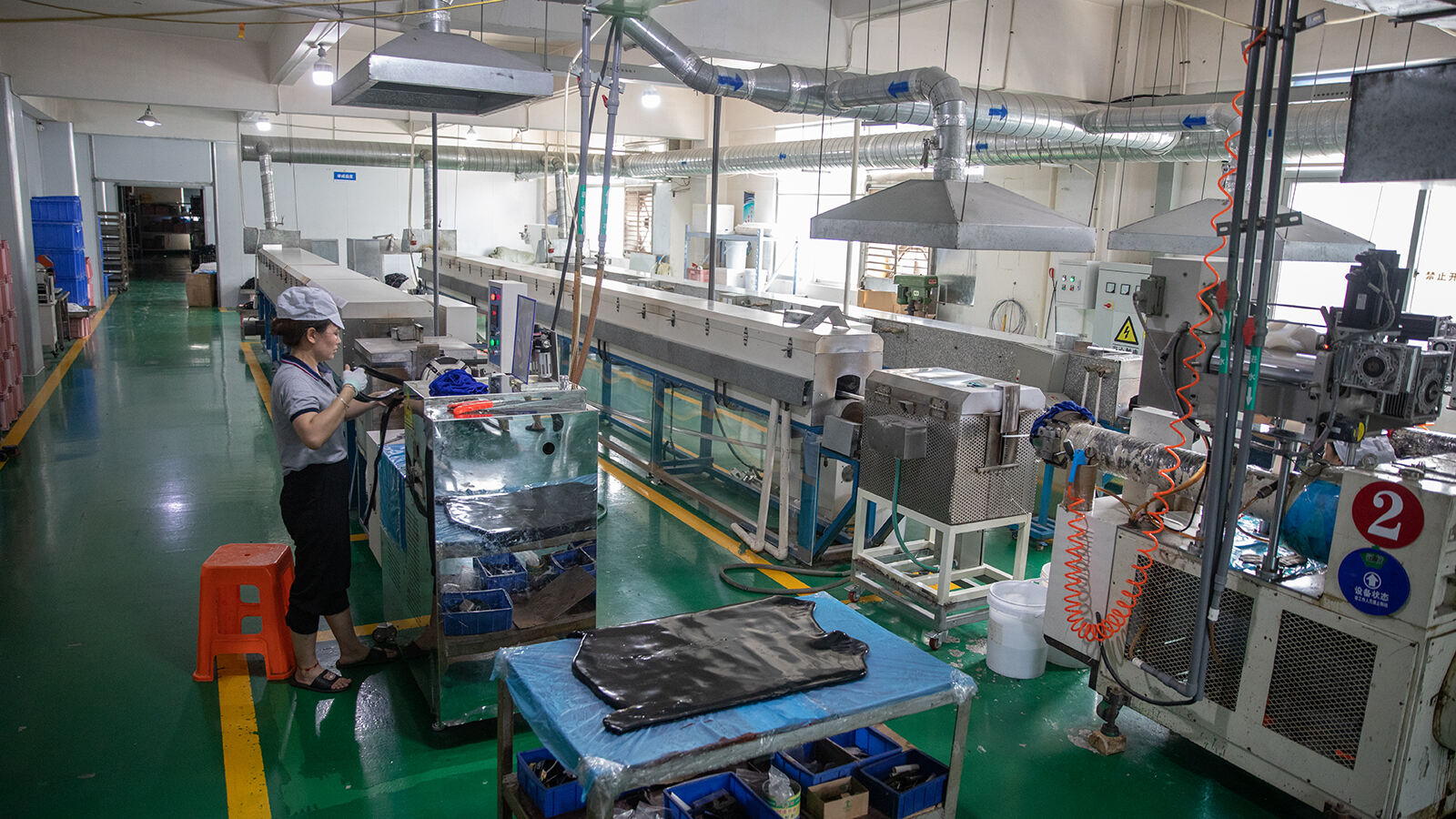
Custom Design and Engineering Support for Silicone Products
Silicone product manufacturers deliver tailored solutions for industries ranging from medical devices to consumer electronics through custom silicone product manufacturing. By leveraging advanced CAD/CAM tools and material science expertise, these specialists create components optimized for temperature resistance (-65°C to 315°C), biocompatibility, and chemical stability.
Material Selection Guidance with Engineering Expertise
Manufacturers help clients find the right silicone formulation through detailed analysis of their specific requirements. For example, liquid silicone rubber (LSR) works well for large scale manufacturing runs while high consistency rubber (HCR) tends to be preferred for making those really precise seals. According to a materials selection guide published recently, about 78 out of 100 industrial projects actually perform better when engineers from different departments get involved in choosing the right materials. This cross functional approach seems to make a real difference in getting the best results from silicone applications across various industries.
Mold Design Options: Injection, Compression, and Transfer Molding
For production scalability, manufacturers offer three core mold technologies:
- Injection molding for complex geometries with ±0.05 mm tolerances
- Compression molding for cost-effective large-scale production
- Transfer molding for encapsulating electronic components
Collaborative Design Support for Complex and Precision Parts
Through iterative prototyping and Design for Manufacturability (DFM) analysis, engineering teams optimize parts for moldability while reducing material waste by up to 60% (Rubber Manufacturers Association, 2023). Real-time collaboration platforms enable clients to review 3D simulations and material test results before tooling commitment.
Silicone Injection Molding and Advanced Manufacturing Capabilities
Liquid Silicone Rubber Injection Molding Process
LSR injection molding produces parts that can withstand temperatures as high as 300 degrees Celsius while maintaining compression recovery rates over 95 percent. The cold runner system works by keeping cured material separate from the liquid feedstock, which cuts down on waste significantly. Medical valve manufacturers report cycle times below one minute for those thin wall components used in wearable devices. Some shops have adopted advanced dual component systems where they mold hard plastic inserts right along with the flexible silicone casing all at once. This approach is particularly useful for making automotive sensors and industrial connectors that need both rigidity and flexibility in their design.
Core Production Methods: LIM, Overmolding, and Extrusion
Manufacturers combine three primary techniques to address complex product requirements:
- LIM (Liquid Injection Molding): Ideal for micro-fluidic channels in PCR devices with 0.2 mm feature resolution
- Overmolding: Bonds silicone to substrates like PEEK or stainless steel for ergonomic surgical tool grips
- Extrusion: Produces continuous profiles for EMI shielding gaskets in aerospace applications
These methods support tolerances as tight as ±0.05 mm under ISO 9001-controlled environments.
Types of Silicone Materials Used in Manufacturing
Material engineers select from 40+ silicone formulations based on end-use parameters:
| Property | LSR | HCR (Heat-Cured) | Fluorosilicone |
|---|---|---|---|
| Temperature Range | -50°C to 300°C | -60°C to 230°C | -65°C to 175°C |
| Key Application | Medical implants | Industrial gaskets | Fuel system seals |
| Durometer Range | 10-80 Shore A | 30-90 Shore A | 30-80 Shore A |
From Raw Material to Prototype: The Silicone Production Workflow
The streamlined production sequence progresses through seven validated stages:
- Material Preparation: De-airing in vacuum mixers (<0.1% entrapped air)
- Molding: Multi-cavity tools with automated demolding
- Post-Curing: Thermal treatment at 180°C for 4+ hours
- Deflashing: Cryogenic trimming for burr-free edges
- Surface Treatment: Plasma activation for adhesive bonding
- QC Verification: Coordinate measuring machines (CMM) for dimensional checks
- Batch Testing: ISO 10993 biocompatibility validation for medical devices
This workflow reduces time-to-prototype by 40% compared to traditional rubber manufacturing methods while maintaining FDA 21 CFR 177.2600 compliance for food-contact applications.
OEM and ODM Solutions for Global Clients
Leading silicone products manufacturers offer comprehensive OEM and ODM solutions tailored for global client needs. These partnerships enable brands to leverage industrial-grade manufacturing infrastructure while maintaining focus on core business operations like market strategy and distribution.
End-to-End OEM/ODM Services for International Brands
Specialized companies offer complete support throughout the entire process from initial design all the way through prototyping and large scale manufacturing. The ODM approach really shines when it comes to developing products for specific regions. Brands can tweak silicone parts to fit local regulations and what consumers actually want in different areas without having to spend big bucks on research and development first. Take medical seals as one instance. When working together with ODM partners, companies can create seals that satisfy FDA requirements or produce gaskets good enough for cars that also comply with those strict EU chemical rules called REACH. These manufacturers take care of getting materials certified properly, scaling up production when needed, and handling shipping logistics too. This kind of support makes a huge difference for businesses trying to break into tough markets like Asia or Europe where compliance is so important.
Rapid Prototyping and Customization for Fast Time-to-Market
Silicone manufacturers today are cutting down on development time thanks to liquid injection molding techniques for prototyping. Instead of waiting months, clients can get their hands on actual working samples in around 10 to 15 workdays. These samples come with immediate feedback about whether the design will actually work in production. The speed really matters when companies need to bring out products just in time for holiday seasons or catch up with new trends in medical devices. What's interesting is how these companies manage global operations too. Their teams speak multiple languages and handle communication across over 15 different time zones. This means businesses all over North America, Europe, and Asia Pacific regions can track progress continuously without waiting for business hours to overlap.
Post-Molding Processing and Value-Added Secondary Operations
Essential Post-Molding Steps: Trimming, Curing, and Inspection
Once silicone components come out of the mold, manufacturers need to perform several important steps to get them ready for use and looking good. First off, they trim away all that extra flash material with special cutting tools. Then comes the curing process which really makes a difference in how strong and heat resistant the final product will be. Some research shows that getting the curing right can actually boost durability by about 30% for medical grade silicones according to MDDI last year. After this, automated inspection systems check each part against computer designs, throwing out anything with air bubbles or measurements that are off by more than 0.2 mm either way. These quality checks help maintain consistency across production runs.
Overmolding and Assembly Integration for Multi-Material Components
When specialized manufacturers want to merge silicones with metals or thermoplastics, they often turn to overmolding techniques where liquid silicone rubber gets injected onto parts that are already made. The result? Seals that work great in car connectors and those special antimicrobial grips we see on many handheld gadgets nowadays. After this step, robotic assembly lines come into play, putting all these mixed material parts together into complete products. These assemblies can handle pretty strong forces too, with peel strength ratings going above 15 Newtons per square centimeter which makes them suitable for tough industrial environments where reliability matters most.
Precision Finishing Techniques for High-Tolerance Silicone Parts
When working on parts that need really fine details, techniques such as laser etching or micro abrasive blasting can get surfaces down to around Ra 0.4 microns. Some companies also use plasma activation treatments which help materials stick together permanently when bonded with special adhesives. This matters a lot in making medical equipment where the body needs to accept whatever gets implanted inside it. For those who make components for airplanes or computer chips, they typically run everything through coordinate measuring machines, or CMMs for short, to check if all important dimensions fall within plus or minus 5 microns tolerance before these parts ever leave the factory floor for shipment.
Silicone products manufacturers combine these value-added processes to meet stringent requirements across regulated industries, ensuring parts perform reliably in their intended environments.
Quality Assurance, Compliance, and Industry-Specific Expertise
Testing and compliance with FDA, ISO, ASTM, and USP Class VI standards
Top silicone product makers put their components through extensive testing that follows international standards. When it comes to medical grade materials, following FDA rules is essential to make sure nothing harmful gets into patients bodies. Most companies also have ISO 9001 certification which helps maintain quality control across production runs. Around 85 percent of major players in the industry currently comply with USP Class VI standards for silicone used in implants something absolutely necessary for any device going inside humans. Getting all these certifications right takes work from different departments within companies who need to ensure materials pass ASTM tests for things like heat tolerance and resistance to chemicals breaking them down over time.
In-process and final quality inspection protocols
Modern silicone manufacturing integrates real-time monitoring with automated vision systems to maintain ±0.02 mm dimensional accuracy. Post-molding inspections include:
- X-ray scanning for micro-void detection
- Durometer testing for hardness validation
- Tensile strength verification per ISO 37 standards
Manufacturers employing AI-powered defect detection systems reduce quality escapes by 62% compared to manual methods, particularly in automotive sealing component production.
Serving regulated industries: medical, automotive, and food-grade applications
Specialized silicone formulations address unique industry demands:
| Industry | Key Requirements | Compliance Focus |
|---|---|---|
| Medical | Biocompatibility, sterilization | ISO 13485, USP Class VI |
| Automotive | Temperature resistance (-60°C to 250°C) | IATF 16949, SAE J200 |
| Food-Grade | Non-toxic, odorless performance | FDA 21 CFR 177.2600, EC 1935/2004 |
This multi-standard compliance framework enables manufacturers to deliver components meeting EU Medical Device Regulation deadlines while maintaining automotive supply chain reliability.
FAQ
What are the benefits of using custom silicone product manufacturing?
Custom silicone product manufacturing offers tailored solutions with enhanced temperature resistance, biocompatibility, and chemical stability. It allows for optimization in material selection and precise component design.
What molding techniques are adopted in silicone product manufacturing?
Manufacturers use injection, compression, and transfer molding techniques, which accommodate complex geometries, large-scale production, and electronic component encapsulation respectively.
How does rapid prototyping impact product development?
Rapid prototyping cuts down development time significantly, allowing companies to get working samples in just 10 to 15 days, thereby speeding up the launch process and addressing market trends efficiently.
What quality certifications do silicone manufacturers adhere to?
Silicone manufacturers comply with various standards such as FDA rules, ISO 9001, ISO 13485, and USP Class VI to ensure safety and quality, especially for medical and food-grade applications.