
 EN

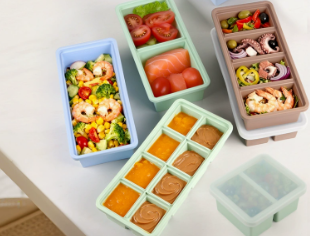
Custom Cavity Design: From Lattice Patterns to Functional Ice Shapes
Why Lattice, Geometric, and Spherical Shapes Enhance Cooling and Presentation
A custom silicone ice cube tray unlocks design potential far beyond standard cubes. Lattice and geometric cavities increase surface-area-to-volume ratio—accelerating chill transfer and promoting even temperature distribution in beverages. In contrast, spherical and large-format shapes minimize surface exposure, slowing melt rates to preserve cocktail strength and prevent rapid dilution. Visually, lattice patterns add depth and dimension to the glass, while faceted geometries refract light for enhanced photogenic appeal—valuable across social media–driven hospitality and home use.
However, form must serve function: excessively thin lattice walls may freeze quickly but fracture during ejection; deep or narrow cavities can delay release and require extended freezing times. Factories should evaluate the interplay between exterior geometry, internal volume, and wall thickness—not as isolated features, but as an integrated thermal-mechanical system. With balanced cavity engineering, a single silicone ice cube tray can reliably support diverse applications—from quick-chill highballs to slow-melt spirit serves—while delivering both functional performance and distinctive brand presentation for home kitchens, bars, and premium hospitality programs.
Mold Engineering for Release Integrity: Balancing Detail and Demolding Performance
Mold engineering is the decisive factor in whether intricate lattice, geometric, or spherical cavities release cleanly—without tearing, distortion, or excessive user effort. Undercuts and fine grooves enhance visual fidelity but also raise demolding resistance. To resolve this, experienced manufacturers optimize draft angles (typically 2–3°), polish cavity surfaces to a mirror finish, and select liquid silicone rubber with a Shore A hardness of 40–60—soft enough to ease release, yet firm enough to retain crisp edge definition.
Venting and gate placement are equally critical: poorly positioned gates or inadequate venting trap air, leading to incomplete fills or fragile lattice tips. Before tooling begins, suppliers should conduct mold flow simulation or geometry review to identify stress concentrations and validate ejection paths. Tight tooling tolerances ensure consistent cavity volume across production runs, while allowing controlled flex during demolding. The result is a durable, food-safe silicone ice cube tray that reproduces complex shapes reliably—cycle after cycle—without cracking, warping, or demanding aggressive twisting from the end user.
Cavity Quantity & Layout Optimization for Commercial and Residential Use
6–24-Cavity Configurations: Matching Output Needs to End-User Applications
Cavity count directly reflects real-world usage—not just manufacturing efficiency. A 6-cavity layout suits low-volume, high-intent applications like craft cocktails or baby food portions, where oversized cubes, easy stacking, and freezer-space conservation matter most. The 14-cavity configuration remains the residential workhorse: it yields enough ice for one or two large pitchers without monopolizing shelf space. For commercial operations—bars, coffee chains, and catering kitchens—18–24 cavities per tray significantly reduce refill frequency during peak service, while keeping individual cube size practical for dispensing and serving.
Layout strategy further refines utility: offset or honeycomb arrangements maximize cavity density without compromising structural rigidity. Factories typically recommend standardized counts—6, 12, 14, 16, 18, 21, or 24—based on validated data around hourly ice consumption, freezer depth constraints, and ergonomic handling. This ensures each configuration aligns with actual workflow—not theoretical capacity.
Thermal & Mechanical Design: Ensuring Uniform Freezing and Reliable Ejection
Once cavity count and layout are finalized, thermal and mechanical integrity determines consistency across every freeze-release cycle. Minimum wall thickness between cavities should be 3–5 mm to prevent tearing during repeated demolding; inconsistent thickness creates thermal “hot spots,” delaying center-cavity freeze times. Because silicone compression molding lacks runners, uniform base thickness and balanced fill paths become essential for even heat transfer.
A slight draft angle (2–3°) on cavity walls supports clean ejection of lattice and geometric forms without micro-cracking. Larger trays—especially 24-cavity versions—benefit from reinforced rims or thicker perimeter frames to resist flex when carried full. Paired with 40–60 Shore A durometer silicone, these features deliver predictable cube size, faster release, reduced user effort, and extended tray life—key markers of professional-grade design.
OEM/ODM Factory Capabilities for End-to-End Silicone Ice Cube Tray Development
From CAD Design to FDA-Compliant Production: The Custom Silicone Ice Cube Tray Workflow
A trusted factory owns the full development lifecycle—from initial CAD file to compliant, shelf-ready product. Buyers typically submit 2D sketches or 3D models, which mold engineers then refine for manufacturability: adjusting draft angles, optimizing parting lines, validating cavity spacing, and ensuring lattice or logo details survive repeated freeze-thaw cycles without degradation.
Tooling follows engineering validation, and first-run samples are molded using certified food-grade liquid silicone rubber. Leading partners embed compliance—FDA 21 CFR §177.2600, LFGB §30 & 31, REACH SVHC screening, and BPA-free assurance—into material selection and process controls, not as a final checkbox. Compression molding suits lower-volume, thicker-walled designs; injection molding of LSR enables tighter tolerances, finer detail, and scalable production. Post-curing removes volatile compounds, followed by precision trimming and secondary finishing—including color matching, embossing, and private-label packaging. Final inspection verifies cavity count, dimensional accuracy, and food-contact safety. Documented process controls and batch traceability protect against costly rework and import delays.
Selecting a Reliable Silicone Ice Cube Tray Manufacturer: Key Evaluation Criteria
When vetting a silicone ice cube tray manufacturing partner, prioritize demonstrated expertise in food-grade silicone kitchenware and end-to-end OEM/ODM execution—not catalog breadth. A capable supplier integrates tool design, cavity geometry optimization, color formulation, sampling, packaging, and final inspection into a single, auditable process.
| Evaluation Area | What to Verify |
|---|---|
| Compliance | Valid, current documentation for FDA, LFGB, REACH, and BPA-free status—verified per batch, not just at launch. |
| Engineering | In-house mold flow simulation or equivalent capability to resolve trade-offs between lattice detail and demolding reliability. |
| Customization | Proven ability to modify lattice, geometric, spherical, or logo-based cavity inserts without full retooling—using modular insert systems or rapid prototyping. |
| Quality systems | Defined sampling protocols (e.g., AQL Level II), dimensional tolerance reports per cavity, and pre-shipment inspection with photo documentation. |
| Logistics | Experience managing large-scale production runs, export-compliant packaging (including moisture barriers and drop-test validation), and adherence to seasonal delivery windows. |
Request first-article inspection (FAI) samples and a clear, milestone-based timeline—from CAD approval through final shipment. This disciplined approach minimizes rework, guarantees consistent cavity release across production volumes, and safeguards brand integrity across both commercial and residential product lines.
FAQ
What are the unique benefits of custom cavity designs?
Custom cavity designs in silicone ice cube trays offer enhanced cooling efficiency, slower melt rates, and visually appealing patterns that elevate beverage presentation.
How important is mold engineering in tray production?
Mold engineering is crucial for ensuring clean cavity release, maintaining intricate designs, and preventing issues like tearing or distortion.
What are the ideal cavity counts for various applications?
Six-cavity trays suit low-volume, intentional uses, while 14-cavity trays are versatile for household needs. Larger trays with 18–24 cavities are preferred for commercial operations.
Why is FDA compliance essential in ice cube tray manufacturing?
FDA compliance ensures material safety for food contact, reinforcing consumer trust and meeting regulatory standards globally.
How do suppliers validate cavity geometry before production?
Suppliers use mold flow simulations and geometry analyses to prevent stress concentrations and ensure reliable demolding for intricate designs.
Table of Contents
- Custom Cavity Design: From Lattice Patterns to Functional Ice Shapes
- Cavity Quantity & Layout Optimization for Commercial and Residential Use
- OEM/ODM Factory Capabilities for End-to-End Silicone Ice Cube Tray Development
- Selecting a Reliable Silicone Ice Cube Tray Manufacturer: Key Evaluation Criteria
- FAQ