
 EN

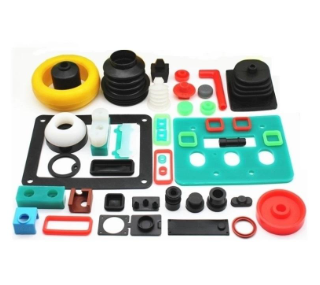
Why Partnering with a Custom Silicone Manufacturer Ensures Seamless Integration
Working with a custom silicone manufacturer creates one accountable team for material selection, mold design, and full-scale molding. Early design-for-manufacturability (DFM) input adapts product geometry to silicone-specific requirements—such as wall thickness, draft angles, parting lines, and venting—before tooling begins. This reduces expensive mold revisions and keeps first-article approval on schedule. An integrated partner also aligns mold architecture with the chosen process—liquid silicone rubber (LSR) injection or compression molding—protecting tight tolerances, surface finish, and cycle time. In-house toolmaking and process validation eliminate handoffs that commonly cause delay or quality drift. Certified quality systems such as ISO 13485 and FDA registration support repeatable, documented output for medical, industrial, and consumer applications. Engineering, tooling, and production stay coordinated under one partner instead of being split across separate vendors, lowering supply chain risk. The result is a predictable path from prototype to OEM/ODM mass production, with fewer design loops, shorter ramp-up, and consistent output as volumes scale. Industry benchmarks suggest that early DFM collaboration can reduce time-to-market by 30–40% in custom silicone programs.
The Integrated Mold Development Process: From Concept to Validated Tooling
CAD Design Review & DFM Optimization for Silicone-Specific Requirements
A custom silicone manufacturer begins with CAD design review and DFM (Design for Manufacturability) optimization. Engineers assess part geometry, wall thickness, draft angles, undercuts, and parting lines against silicone’s unique processing behavior. Because liquid silicone rubber flows at low viscosity, mold design must anticipate flash, venting, and precise shut-offs. Mold flow simulation predicts fill patterns, knit lines, air traps, and curing uniformity before steel is cut. Gate location and runner balance are adjusted to prevent premature cure, short shots, or burning. Shrinkage and thermal expansion factors are modeled to hold tight tolerances. Draft angles are refined to support clean release without tearing thin silicone sections. DFM feedback loops also compare mold design to the selected silicone grade, because high-durometer and low-viscosity materials behave differently. This early review reduces tooling rework, lowers cost, and accelerates validation, ensuring the CAD model is truly production-ready for silicone molding.
Precision Tooling Fabrication: CNC, EDM, Surface Finishing, and Functional Testing
After DFM approval, precision tooling fabrication begins. CNC machining produces mold cores, cavities, and inserts with tight tolerances, while multi-axis operations support complex contours and side actions. EDM (Electrical Discharge Machining) creates sharp corners, narrow ribs, and fine details that standard milling cannot reach. Electrode geometry is machined separately to reproduce fine ribs or micro-features with repeatable accuracy. Surface finishing is tailored to the silicone part: polished cavities improve clarity and release, whereas textured surfaces hide flow marks or add grip. Selected coatings may reduce adhesion and extend tool life. Polishing compounds are selected to avoid contaminating medical or food-grade silicone surfaces. Fabricated tooling then enters functional testing. Test shots validate fill, cure, flash, and ejection under production-like conditions. Process parameters such as temperature, pressure, and cycle time are recorded and refined. Dimensional inspection confirms molded parts meet specification, preventing costly defects and ensuring reliable performance before mass production ramp-up.
Material-Aware Manufacturing: Matching Mold Design to Silicone Grade and Process
Selecting Mold-Compatible Materials: HCR, LSR, Medical-Grade, and High-Temp Silicones
Material choice drives mold geometry, gating, and surface finish. A custom silicone manufacturer evaluates cure behavior, viscosity, and thermal expansion before cutting steel. High-consistency rubber (HCR) is typically compression molded in cavities with generous flash channels and higher clamp forces. Liquid silicone rubber (LSR) flows through cold-runner injection molds requiring tight shut-offs and precise valve gates. Medical-grade silicones demand mirror-polished, crevice-free cavities to reduce contamination risk. High-temperature grades need venting and gate placement that accommodate thermal expansion of up to 0.4% during cure cycles. Mold steel hardness and release coatings are then matched to abrasion, cure speed, and demolding friction. This early material-mold pairing prevents rework and shortens first-article approval cycles—and lowers scrap rates when parameters transfer to full production.
Process Alignment: How LSR Injection vs. Compression Molding Drives Mold Design Decisions
Process choice changes gate location, parting line, and runner architecture. LSR injection molding favors closed-loop metering and cold-runner systems, so mold design must handle shear heating, vacuum venting, and automated demolding. Compression molding depends on preform placement, overflow grooves, and flash containment. The table summarizes key mold design differences:
| Factor | LSR Injection Molding | Compression Molding |
|---|---|---|
| Mold complexity | High; requires cold-runner and valve gates | Lower; direct cavity fill |
| Flash control | Tight shut-offs and vacuum vents | Overflow grooves and flash traps |
| Cycle time | Shorter for high-volume production | Longer due to preform handling |
| Material waste | Lower with cold-runner systems | Higher flash ratio |
A supplier locks tooling strategy before CAD finalization to match process limits and cycle-time targets—preventing mold revisions after trial runs.
From Prototype to Full-Scale Production: The Custom Silicone Manufacturer’s OEM/ODM Workflow
For many product teams, the greatest risk is not designing a silicone part but scaling it without losing tolerance control or material performance. A custom silicone manufacturer reduces that risk by operating a single OEM/ODM workflow that carries the same tooling logic, quality gates, and material data from first samples through mass production. This continuity prevents the common disconnect between prototype suppliers and high-volume molders.
Streamlined Transition: Rapid Prototyping, First-Article Approval, and Production Ramp-Up
Rapid prototyping often uses production-grade steel or aluminum tools to expose shrinkage, flash, and parting-line defects before hard tooling is finalized. First-article approval then verifies dimensions, surface finish, tear strength, and compression set against the CAD model, with coordinate measuring machine (CMM) reports serving as the baseline for later batches. After sign-off, production ramp-up moves in controlled stages—pilot runs, limited production, and then full multi-cavity output. Industry data indicate time-to-prototype can drop by as much as 40% when these stages are aligned, while stable process parameters help maintain first-pass yields during scale-up.
FAQ
Why is it beneficial to work with a custom silicone manufacturer?
Partnering with a custom silicone manufacturer ensures seamless integration of design, tooling, and production. It reduces costly mold revisions, shortens time-to-market, and minimizes supply chain risks.
What is DFM, and why is it important in silicone molding?
DFM (Design for Manufacturability) is essential for adapting part geometry to silicone-specific requirements, improving production efficiency while reducing tooling rework and costs.
How does material selection affect mold design and production?
Material properties like viscosity, cure behavior, and thermal expansion dictate mold geometry, gating systems, and processing methods, which help achieve high-quality and efficient production.
What are the differences between LSR injection molding and compression molding?
LSR injection molding uses closed-loop metering and cold-runner systems, offering shorter cycle times and lower material waste. In contrast, compression molding involves preform placement and results in longer cycle times and higher flash ratios.
How does a custom silicone manufacturer ensure a smooth transition from prototype to production?
The use of consistent tooling logic, quality standards, and material data throughout the OEM/ODM workflow allows manufacturers to efficiently scale production while maintaining quality and performance.
Table of Contents
- Why Partnering with a Custom Silicone Manufacturer Ensures Seamless Integration
- The Integrated Mold Development Process: From Concept to Validated Tooling
- Material-Aware Manufacturing: Matching Mold Design to Silicone Grade and Process
- From Prototype to Full-Scale Production: The Custom Silicone Manufacturer’s OEM/ODM Workflow
-
FAQ
- Why is it beneficial to work with a custom silicone manufacturer?
- What is DFM, and why is it important in silicone molding?
- How does material selection affect mold design and production?
- What are the differences between LSR injection molding and compression molding?
- How does a custom silicone manufacturer ensure a smooth transition from prototype to production?