
 EN

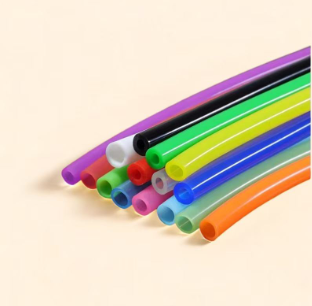
Understanding REACH Obligations Specific to Silicone Tube Manufacturers
For a silicone tube manufacturer targeting the European market, REACH (Registration, Evaluation, Authorisation and Restriction of Chemicals) is more than a legal formality—it’s an operational mandate governing every ingredient in flexible tubing. Enforcement has intensified: non-compliance can trigger market withdrawal and fines reaching millions of euros. At its core, REACH protects human health and the environment by controlling Substances of Very High Concern (SVHCs). Because silicone formulations often contain cyclic siloxanes and metal catalysts, manufacturers must maintain rigorous oversight—from raw material selection to finished product documentation.
Key REACH Articles (56–72) Applied to Flexible Silicone Tubing Production
The backbone of compliant silicone tube production lies in Articles 56 through 72. Article 56 establishes the general duty to avoid using SVHCs unless authorisation is granted. Articles 60–64 outline the authorisation process, requiring manufacturers to demonstrate that risks from substances like D4 or D5 are adequately controlled—or that socio-economic benefits outweigh them. Though outside this range, Article 33 creates an immediate supply-chain obligation: any article containing an SVHC above 0.1% weight by weight (w/w) must be communicated to customers—and, upon request, to consumers—within 45 days. For flexible tubing shipped in rolls or cut lengths, determining the 0.1% threshold per homogeneous material—typically the cured silicone compound—is critical. Articles 67–72 enforce restrictions; if a cyclic siloxane appears in Annex XVII, its use is banned outright regardless of concentration, necessitating reformulation. Collectively, these provisions require manufacturers not only to assess each formulation but also to maintain a live SVHC monitoring program—the Candidate List expands biannually, and overlooking even one newly listed substance can invalidate years of compliance efforts.
Identifying SVHCs Common in Silicone Formulations: D4, D5, and Platinum Catalysts
Silicone tube production relies on base polymers and cross-linkers whose purity directly impacts REACH status. Octamethylcyclotetrasiloxane (D4) and decamethylcyclopentasiloxane (D5) are volatile cyclic siloxanes that persist as residual monomers after polymerisation. Both are classified as SVHCs due to their persistent, bioaccumulative, and toxic (PBT) or very persistent, very bioaccumulative (vPvB) properties. Even high-purity silicone gums may retain D4 and D5 at levels that—after extrusion and post-curing—exceed the 0.1% w/w notification threshold when assessed per homogeneous material. Platinum catalysts, essential for addition-cure systems, are not themselves SVHCs, but they may introduce impurities or form thermally labile complexes. Manufacturers must therefore validate residual D4/D5 content via GC-MS and confirm platinum levels remain below regulatory concern. Many suppliers now offer “low-volatile” grades that keep total D4+D5 below 0.1% in cured articles. Where reformulation isn’t yet feasible, authorisation dossiers become necessary—requiring exposure scenarios and analytical data proving emissions during intended use are negligible. Proactive identification and documentation of these SVHCs is the only path to uninterrupted market access.
ISO 10993-12 Extraction Studies and Analytical Validation (GC-MS/ICP-MS)
ISO 10993-12 specifies sample preparation for chemical characterisation of medical devices—and serves as the foundation for leachables assessment in silicone tubing. A manufacturer selects extraction vehicles—polar, non-polar, or both—to simulate clinical or process exposures. Extraction conditions (temperature, duration, surface-area-to-volume ratio) are designed to exaggerate worst-case use. Resulting extracts undergo dual analytical validation: GC-MS identifies volatile and semi-volatile organic compounds—including low-molecular-weight siloxanes and catalyst byproducts—while ICP-MS detects elemental contaminants such as residual platinum, heavy metals, and trace metals at ultra-trace levels. This paired approach yields a complete leachables profile. Data are compared against toxicological thresholds defined in REACH and ISO 10993-17. Embedding these studies into quality management systems ensures every production lot meets pre-defined extractables limits—providing the empirical basis for non-toxicity declarations required under REACH and customer specifications.
Accelerated Aging & Simulated Use Testing for Low Leachables Performance
Beyond acute extraction, a silicone tube manufacturer must verify safety over the product lifecycle. Accelerated aging protocols—guided by standards such as ASTM F1980—subject tubing to elevated temperatures for predetermined durations to simulate long-term degradation. Post-aging samples undergo extraction and analysis to confirm leachables profiles do not deteriorate. Simulated use testing replicates real operating conditions: fluid flow, pressure cycling, and sterilisation cycles. Extracts from these dynamic tests are analysed for organic and elemental leachables. Consistent results—even after multiple autoclave or gamma sterilisation cycles—demonstrate stable, low-leachables performance, a requirement for pharmaceutical applications. This evidence confirms that toxicity risk remains negligible throughout intended use. For REACH compliance, accelerated aging and simulated use data close the gap between initial material certification and real-world performance—strengthening declarations of compliance and reducing audit burden.
Bridging REACH Non-Toxicity Claims with USP <88> Biological Reactivity Requirements
REACH focuses on restricting SVHCs in silicone formulations, while USP Class VI (Chapter <88>) evaluates biocompatibility through three in-vivo tests: systemic toxicity, intracutaneous reactivity, and implantation. When a silicone tube passes both frameworks, it demonstrates that low leachables under REACH correlate with biological inertness. Manufacturers can cross-reference REACH-attested extractables profiles with USP Class VI results to build a unified toxicity dossier. This alignment satisfies EU chemical safety mandates and FDA expectations for medical-grade materials—reducing duplicative biological assessments and accelerating product approvals.
FDA 21 CFR Part 177.2600 and NSF/ANSI 51 Implications for Food & Pharma Tubing
For food and pharmaceutical tubing, FDA 21 CFR Part 177.2600 governs rubber articles intended for repeated contact, specifying extractives limits under aggressive simulants (e.g., water, heptane). NSF/ANSI 51 sets material and design requirements for food-equipment components. By sourcing REACH-compliant raw materials—and supplementing with FDA-mandated extraction studies and NSF leachables testing—a silicone tube manufacturer validates suitability for direct food contact and hygienic processing. This cross-regulatory approach ensures non-toxicity claims are grounded in both chemical restrictions and end-use exposure evaluation, simplifying compliance for multinational supply chains and preventing costly reformulation delays.
Fulfilling Article 33 Communication Duties via SDS and Real-Time Supply Chain Traceability
REACH Article 33 obliges a silicone tube manufacturer to communicate the presence of SVHCs above 0.1% w/w via Safety Data Sheets (SDS). Operational compliance depends on a real-time traceability system linking supplier raw material certificates to each production lot. Close collaboration with suppliers—reinforced by regular audits and clear quality agreements—ensures accurate, timely data exchange. When a supplier updates an SVHC declaration, the system instantly flags affected batches, enabling rapid downstream notification. Centralised documentation, shared through secure supplier portals, keeps all parties aligned on the latest compliance status. This proactive, integrated approach minimises regulatory risk and strengthens supply chain integrity—particularly for customers in highly regulated sectors like pharmaceuticals and food processing.
FAQs
What is REACH compliance and why is it important?
REACH (Registration, Evaluation, Authorisation and Restriction of Chemicals) compliance ensures companies meet EU regulations for controlling substances that pose risks to human health and the environment. For silicone tube manufacturers, it’s essential to avoid penalties, market withdrawal, and ensure safety standards.
Which substances in silicone formulations are classified as SVHCs?
Common SVHCs in silicone formulations include Octamethylcyclotetrasiloxane (D4), Decamethylcyclopentasiloxane (D5), and impurities from platinum catalysts. These substances must be rigorously monitored and controlled to comply with REACH regulations.
How does Article 33 affect silicone tube manufacturers?
Article 33 mandates manufacturers to notify customers and consumers if SVHCs exceed 0.1% by weight in their products. This requires robust supply chain traceability and accurate documentation.
What analytical methods are used to validate REACH compliance for silicone tubing?
Validation includes GC-MS for organic compound detection and ICP-MS for elemental contaminants. These methods ensure residual SVHC levels and impurities are within acceptable limits.
Why is alignment with USP Class VI and FDA regulations necessary?
Aligning REACH non-toxicity claims with USP Class VI and FDA standards strengthens product safety across medical, food, and pharmaceutical applications. It also streamlines compliance for global markets.
Table of Contents
-
Understanding REACH Obligations Specific to Silicone Tube Manufacturers
- Key REACH Articles (56–72) Applied to Flexible Silicone Tubing Production
- Identifying SVHCs Common in Silicone Formulations: D4, D5, and Platinum Catalysts
- ISO 10993-12 Extraction Studies and Analytical Validation (GC-MS/ICP-MS)
- Accelerated Aging & Simulated Use Testing for Low Leachables Performance
- Bridging REACH Non-Toxicity Claims with USP <88> Biological Reactivity Requirements
- FDA 21 CFR Part 177.2600 and NSF/ANSI 51 Implications for Food & Pharma Tubing
- Fulfilling Article 33 Communication Duties via SDS and Real-Time Supply Chain Traceability
-
FAQs
- What is REACH compliance and why is it important?
- Which substances in silicone formulations are classified as SVHCs?
- How does Article 33 affect silicone tube manufacturers?
- What analytical methods are used to validate REACH compliance for silicone tubing?
- Why is alignment with USP Class VI and FDA regulations necessary?