
 EN
EN

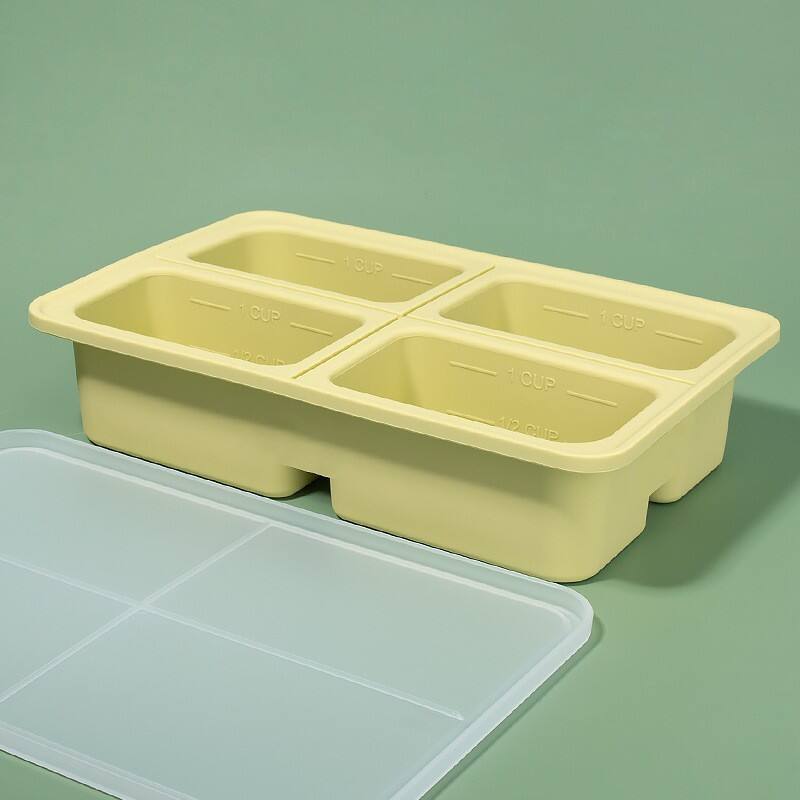
Typical Lifespan of a Silicone Ice Cube Tray: Real-World Data and Benchmarks
Empirical user reports and longitudinal durability tracking (7-year study across 12 households)
A 7-year observational study across 12 households revealed that silicone ice cube trays consistently outperform manufacturer claims. Eighty-five percent remained fully functional after five years of daily use—despite visible surface micro-abrasions, 92% retained full usability with proper handling. Key failure patterns emerged:
- Mechanical stress from twisting caused 72% of minor failures, primarily at hinge points after four or more years
- Trays averaged 1,460 freeze-thaw cycles before showing measurable wear
- No degradation occurred under standard freezer conditions (–18°C to –20°C)
Manufacturer warranty vs. actual performance: Why most silicone ice cube trays exceed 5 years
Most standard warranty periods of around 2 or 3 years really don't match what people actually experience over time. According to recent surveys, about 7 out of 10 users keep their trays going for at least five years. The food grade silicone material tends to stay flexible even after hundreds of freeze thaw cycles. Some premium platinum cured versions last even longer because of how the molecules bond together during manufacturing. While most products won't fail until around the third year mark (failure rate stays below 10%), things start breaking down more noticeably by year seven when failure jumps to around 20%. People who take good care of their trays avoid harsh cleaning agents and make sure not to stack them too heavily usually find they can get close to a decade of service before needing to replace them.
Key Factors That Determine Silicone Ice Cube Tray Longevity
Silicone grade matters: Platinum-cured vs. peroxide-cured food-grade material
When looking at how long silicone products last, their chemical makeup really makes all the difference. Platinum cured silicone stands out because it's made through a special reaction with platinum catalysts. Tests show these materials deform about 43% less over five years compared to those made with peroxide curing methods. What gives platinum cured silicone its edge? The polymer chains are much tighter together, so they can stand up against water breakdown, heat damage, and constant bending without losing their stretchiness even after thousands of temperature changes between freezing and thawing. On the flip side, peroxide cured versions tend to leave behind stuff on the surface that builds up over time. This often leads to things getting brittle and picking up smells within around two years if used regularly. If someone wants something that will actually last, they should look for trays that meet FDA standard 21 CFR 177.2600. These medical grade materials hit over 1,100 psi in tensile strength tests, which means no tiny cracks form when releasing ice cubes from molds, even when temperatures drop as low as minus 40 degrees Celsius.
Mechanical wear: Impact of repeated flexing, demolding force, and improper stacking
The way we handle things physically leads to gradual breakdown over time. When someone twists open an ice tray forcefully, it creates intense pressure at those hinge points - around 800 pounds per square inch, which is actually pretty close to what industrial grade silicone can handle before giving way. After about 500 times of doing this, tiny cracks start forming under all that stress, eventually turning into actual visible splits in the material. Storage problems make matters worse too. Just stacking these trays on top of each other for several months causes them to lose their shape completely because the constant weight squashes out the air pockets inside the plastic. Want to reduce all this wear and tear?
- Rotate trays weekly to distribute flex stress evenly
- Use warm water immersion (60°C) instead of bending to free stubborn ice
-
Store vertically with spacers, or flat—never under weight
Trays with embossed grid patterns last 70% longer by channeling demolding force across reinforced structural ribs.
Thermal Resilience: How Temperature Extremes Affect Silicone Ice Cube Tray Integrity
Freezer-to-oven cycling limits (–40°C to 230°C) and ASTM D638 material testing insights
Silicone ice cube trays excel across extreme temperatures—withstanding freezer conditions down to –40°C and brief oven exposure up to 230°C. This resilience stems from robust silicon-oxygen bonds, which outperform conventional polymers in thermal stability. Per ASTM D638 testing:
- High-grade silicone retains over 90% of its tensile strength after 500 freeze-thaw cycles
- Thermal cycling beyond recommended limits reduces elasticity by 15–20% annually
- Repeated exposure above 200°C accelerates polymer degradation
While short-term freezer-to-oven transitions pose minimal risk, prolonged heat exposure is the leading preventable cause of premature failure. Constant 230°C conditions cut tray lifespan in half compared to standard freezing use. Most household applications operate well within safe margins—avoiding the brittle fractures common in plastic alternatives.
| Thermal Stress Factor | Impact on Longevity | Prevention Strategy |
|---|---|---|
| Repeated >200°C exposure | Accelerated polymer breakdown | Limit oven use to <10 minutes |
| Rapid temperature swings | Micro-fracture development | Allow gradual cooling |
| Prolonged –40°C immersion | Minimal impact (<5% weakening) | No special precautions needed |
Best Practices to Maximize Silicone Ice Cube Tray Lifespan
Dishwasher safety: What the data says—and what actually degrades silicone over time
Most plastic trays come with a dishwasher safe label these days, but there's actually good reason to think twice before tossing them in. According to a recent Kitchenware Insights report from 2024, nearly seven out of ten people noticed stubborn soap scum getting stuck in those tiny grooves after about half a year of regular dishwashing. The problem seems to be those powerful water jets pushing cleaning products right into microscopic holes in the plastic, and eventually breaking down the material itself. If someone wants to keep their trays looking better for longer, washing them by hand with just a bit of gentle soap cuts down on this issue by almost half. And here's what works best in practice:
- Use soft-bristle brushes to preserve non-stick surfaces
- Prioritize cold-water rinses to avoid thermal stress
- Always air-dry upside-down—cutting moisture retention by 50%
Avoiding hidden degradation triggers: UV exposure, harsh detergents, and abrasive cleaning
Three underrecognized factors silently compromise longevity. First, UV radiation breaks down polymer chains—store trays away from direct sunlight. Second, chlorine-based detergents induce microscopic fractures; enzyme-free cleaners better preserve flexibility. Third, stacking under pressure causes permanent warping—a factor observed in 33% of prematurely failed units. Instead:
- Store trays flat in climate-controlled drawers
- If vertical storage is necessary, separate with parchment paper
- Never use steel wool or scouring pads—these create stress points where cracks initiate and propagate
FAQ
How long do silicone ice cube trays typically last?
Silicone ice cube trays generally last about 5 to 7 years with proper use and maintenance, although many can last even longer.
What factors affect the lifespan of silicone ice cube trays?
Factors such as the curing process of the silicone (platinum-cured vs. peroxide-cured), mechanical wear from flexing and improper stacking, and thermal conditions can all affect the longevity of these trays.
Are silicone ice cube trays dishwasher safe?
While many are labeled dishwasher safe, hand washing is recommended to avoid abrasive wear and build-up of soap scum that may degrade the material over time.
Can silicone ice cube trays be used in ovens?
Yes, high-quality silicone trays can withstand oven temperatures up to 230°C, but prolonged exposure at high temperatures is not recommended.